lundi 9 mars 2015

Parasite of the month

Anguillicola crassus (Anguillicoloides crassus)


This nematode infects the Japanese eel, Anguilla japonica. Free-living larvae settle in the substrate to get ingested by an intermadiate host, typically a copepod. Young eels get infected by feeding on infected copepods. Interestingly, when infected copepods are eaten by other fishes, the parasite remains alive and can be transmitted from these paratenic hosts to larger eels feeding on them. In the eel, the parasite migrates to the swim bladder where it sexually produces eggs and causes pathological damages (see Muñoz et al. 2015 and references therein). These eggs then pass through the digestive tract and are released into the water.


Importation of Japanese eels to many places of the world for aquaculture is believed to have facilitated the spillover of A. crassus to native eels (Dangel et al. 2013).  Within 30 years, most populations of European eels A. anguilla became infected and the parasite is now specializing to infect its novel host (Weclwaski et al. 2013). This rapid spread to native species is connected to the high plasticity of the parasite's life-cycle. Larval infections have been reported in a range of organisms, including aquatic insects and amphibians (Moravec &Skoríková 1998). Recent evidences suggest that the use of paratenic hosts might be facilitated by hyperparasitism of native parasites by A. crassus (Emde et al. 2013). As a consequence, very few measures can be installed to protect native species from this invader and the spillover continues to cause high mortality in native eel populations (Kirk 2003, Barry et al. 2014).


lundi 9 février 2015

Joensuu here we come!

Ecologists and evolutionary biologists will meet in Joensuu (Finland) on 9-11 February 2015. The meeting is organised under Oikos Finland and supported by Nordic Society Oikos, Suomen Biologian Seura Vanamo and by Societas Pro Fauna et Flora Fennica.

During two days, the Finnish national meeting for ecologists and evolutionary biologists will gather over 215 participants to the Joensuu Campus of the University of Eastern Finland.

Plenaries include Paula Harrison (Univ. Oxford), Anssi Karvonen (Univ. Jyväskylä), Elizabeth Borer (Univ. Minnesota) and Toni Laaksonen (Univ. Turku).

Here is a more detailed program: https://www.jyu.fi/bioenv/en/divisions/eko/ecology_meeting/Programme


source for picture: https://www.jyu.fi

dimanche 18 janvier 2015

28:06:42:12

The end is near!

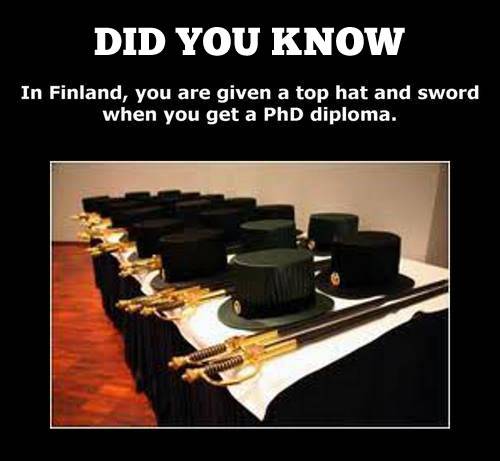
Feels weird to finally see my name here (but good weird!): http://www.helsinki.fi/bio/tutkimus/vaitoskirjat/  

Here is a link to the electronic version of my doctoral dissertation: https://helda.helsinki.fi/bitstream/handle/10138/152906/swimming.pdf?sequence=1

I'll defend my doctoral dissertation on the 30th of January at 12 o'clock noon at lecture hall 2, Infocentre Korona (Viikinkaari 11, Helsinki).


Comment on the image: from what I have heard, it is not given to you actually - you just get the right to buy it.

samedi 20 décembre 2014

Parasite of the month

Ophiocordyceps sinensis


This fungus parasitizes the caterpillar of ghost moths (Thitarodes spp.) that live on the Tibetan Plateau and the Himalayas. It infects hosts during the summer, after caterpillars shed their protective coatings and move underground to hibernate. The fungus consumes the host during the hibernation in alpine meadows and produces a stalk-like fruiting body that emerges from the head of the caterpillar in the early spring.  The germination process leads to the death and mummification of the larvae. During this process, infected larvae tend to remain vertical to the soil surface with the heads up. This facilitates germination and dissemination of the spores by the fungus.

The fruiting body of this fungus is used as herbal remedy to cure several diseases, especially those related to lungs, kidneys, and erectile dysfunction. The oldest reference to its use in medicine dates from the 15th century. Overharvesting for these means has led to the rarefaction of the fungus. It is now classified as endangered species. Yet, the fungus is still being sold in Asia and its price can reach up to 65 700€ per kg - quite an expensive Christmas gift...


mercredi 22 octobre 2014

Parasite of the month

Microphallus sp.

The life-cycle of trematodes typically involves asexual reproduction in molluscs and the use of a secondary intermediate host for transmission (fish, amphibians...) to the final host where sexual reproduction occurs (birds). The production of cercariae larvae in the mollusc is considered critical for these parasites. Indeed, this production of thousands of clones determines an important part of the parasite's success to complete its life-cycle.


The trematode Microphallus sp. is widespread in New Zealand (although undescribed). It reproduces in the gonads of the aquatic snail Potamopyrgus antipodarum (see picture). Kopp and Jokela (2007, Oikos) showed that the presence of the great pond snail Lymnea stagnalis, following its introduction at the end of the 19th century, alters the transmission of Microphallus sp.: the presence of the introduced species reduces the ability of the parasite to enter in contact with its native host.

Indeed, the parasite has evolved to infect the native snail but the introduced species is not compatible with the parasite (i.e. Microphallus sp. can't reproduce efficiently in the introduced snail). Therefore, these introduced hosts constitute decoys for the parasite. This in turn decreases the probability of infecting the native P. antipodarum, a phenomenon called dilution effect. Overall, the study by Kopp and Jokela highlights the need to consider infection rates in a more realistic context, taking in account other species in the community as well as their interactions.


source for picture: http://www.indiana.edu 

mercredi 1 octobre 2014

Guess who's on the faculty's facebook page?

Yep - that might be me :)


My project was selected to go on our faculty's facebook page to celebrate  Säätiöpäivä (i.e. Foundation Day). Like many research projects conducted at the University of Helsinki, my Ph.D. work is supported by a grant from a private foundation. Since its creation in 1972, the Maj and Tor Nessling Foundation aims at advancing Finnish science and culture. Nowadays, it supports scientific research concentrating on environmental problems and their solutions.


On the picture: setting minnow traps to catch stickleback


vendredi 26 septembre 2014

Parasite of the month

Ribeiroia ondatrae

This trematode reproduces asexually in ram's horn snails before infecting amphibians where it causes limb malformation. This in turn is supposed to enhance predation by the final hosts, i.e. birds.


Human-induced eutrophication (artificial enrichment of water bodies with nutrients, typically nitrogen and phosphorus) has been shown to facilitate its transmission by altering the interactions between the parasite and the snail (Johnson et al. 2007 PNAS). Indeed, eutrophication promotes the growth of algae and in turn favours populations of grazers such as ram's horn snails. In these conditions, snails occur at high densities and grow bigger. This provides more resources for the parasite and thus facilitate its transmission to and development in the snail. Moreover infected snails were better able to tolerate infection for longer periods of time. This has caused the production of cercariae (stages infective to amphibians) to double in eutrophied waters, generating outbreaks in amphibian populations.

Recently, the impact of global warming has been investigated concerning the transmission of this parasite (Paull & Johnson 2014 Ecology Letters). Using mesocosms, researchers showed that increases in temperature extend the time window for parasite transmission from snails to tadpoles. Yet, the study also revealed that less cercariae are produced during the summer at warmer temperatures compared to under normal conditions. This generates an asynchrony in the presence of cercariae and of amphibian hosts and lowers the overall transmission of the parasite in heated mesocosms. These results indicate that global warming might not be beneficial to all parasites.

It would be interesting to investigate the joined effects of eutrophication and global warming. Indeed, eutrophication is often associated with higher water temperatures. The negative effects of global warming on parasite transmission could then be reduced by the positive effects of eutrophication on the snail-trematode interaction.


source for picture: http://www.science-art.com